.svg)
.svg)
Digital Product Passports in the Supply Chain

-DPPs-in-Supply-Chain.jpg)

As supply chains extend across continents involving hundreds of stakeholders, transparent and verifiable data becomes essential. Organisations must balance operational efficiency with environmental responsibility while maintaining complete visibility across their value chains.
Implementing Digital Product Passports in the supply chain offers a transformative approach to addressing these interconnected demands. Traditional systems struggle to provide the real-time insights necessary for informed decision-making. Digital Product Passports bridge this gap, creating a comprehensive data framework spanning the entire product lifecycle.
Understanding Digital Product Passports
Digital Product Passports represent a fundamental shift in how product information is captured, stored and shared. Accessible through QR codes, RFID tags, NFC technology or similar data carriers, these digital tools contain comprehensive lifecycle data for individual products or batches.
The information encompasses manufacturing details, raw material composition, supply chain journey milestones, ownership records, warranty information, and end-of-life instructions. This rich dataset enables stakeholders throughout the value chain to make informed decisions based on accurate, verifiable information.
The driving force behind widespread adoption is the Ecodesign for Sustainable Products Regulation (ESPR), which came into force on 18th July 2024.
This regulation establishes ecodesign requirements for products manufactured or sold within the EU, mandating that regulated products must include a Digital Product Passport. The first working plan starts to outline implementation timelines for priority industries.
How do Digital Product Passports help with Supply Chain Sustainability?
Supply chain emissions present a critical sustainability challenge. Scope 3 emissions account for approximately 70%- 90% of a company's total carbon footprint, making them essential to address.
Digital Product Passports provide granular data necessary to measure and reduce these emissions. By capturing carbon footprint information at the product level, organisations gain insights into emissions from manufacturing, transportation and distribution. This data aggregates to create a comprehensive view of the entire carbon portfolio.
The manufacturing sector, responsible for 25% of global carbon emissions, represents a critical intervention point. Digital Product Passports in the supply chain enable manufacturers to demonstrate environmental performance through verifiable data, supporting compliance with the EU Green Claims Directive.
Beyond carbon emissions, these passports support broader sustainability objectives. Information about raw material sourcing addresses concerns around conflict minerals and environmental degradation. Recyclability data and disposal instructions promote circular economy practices, enabling waste management companies to process products appropriately.
Increased Supply Chain Visibility & Transparency
Supply chain visibility remains a significant challenge for organisations operating in global markets.
Research indicates that 55% of business leaders identify improving supply chain visibility as a top priority. Without comprehensive oversight, companies face increased costs, operational inefficiencies and limited ability to respond to disruptions.
Digital Product Passports address this challenge by creating a transparent data-sharing mechanism. Rather than relying on disparate systems that create information silos, these passports enable secure collaboration between suppliers, manufacturers, logistics providers and retailers.
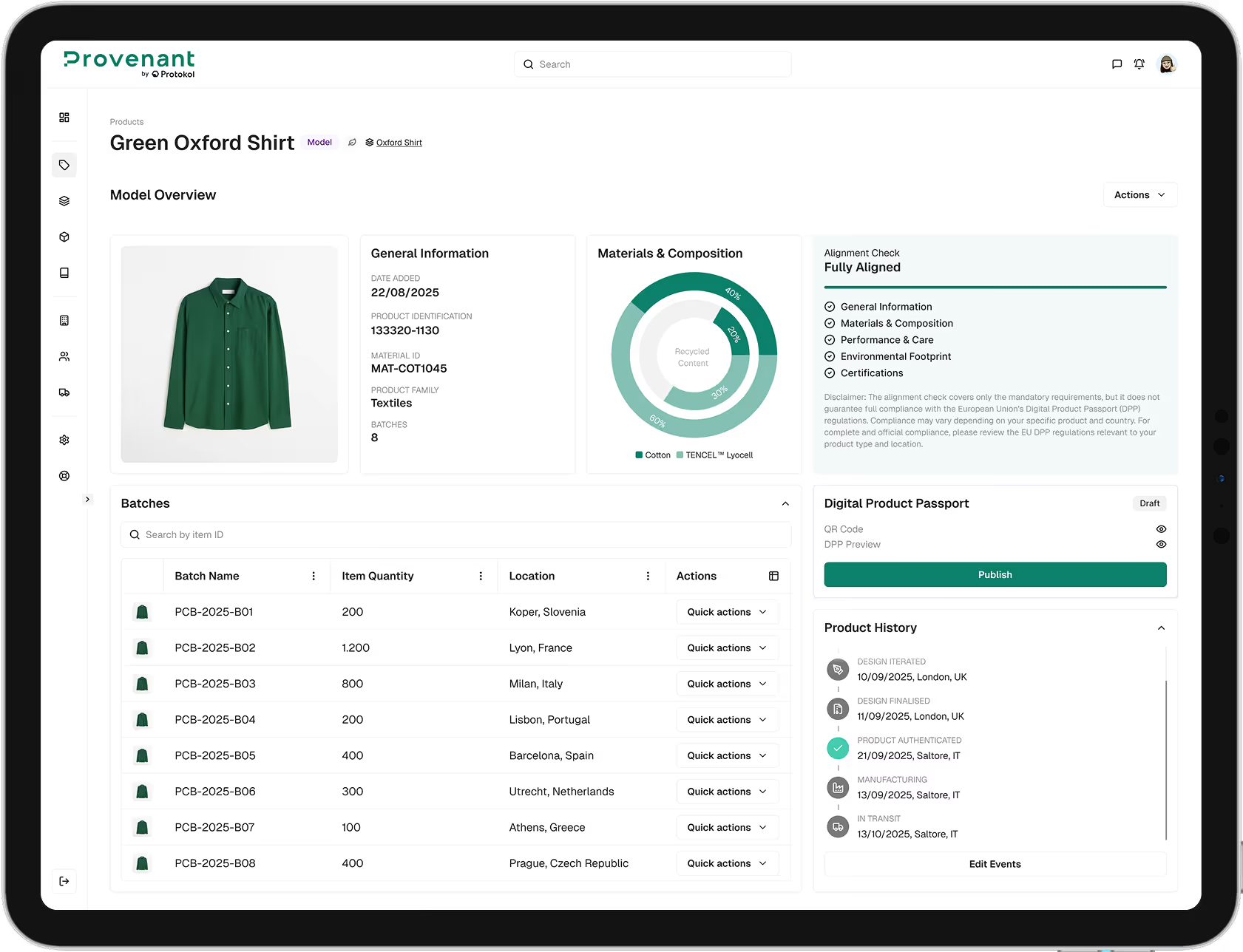
With Provenant’s DPP platform, each stakeholder can access relevant information while maintaining appropriate data privacy controls, delivering enhanced visibility and transparency throughout the supply chain.
Enabling Circular Economy Practices
Transitioning to circular economy models requires comprehensive product information extending beyond the initial sale. Digital Product Passports maintain relevant data throughout extended lifecycles, including resale, repair and recycling phases.
Consumers increasingly value sustainability information when purchasing. Implementing Digital Product Passports in the supply chain provides transparent access to environmental impact data, recycling options and product take-back schemes, empowering participation in circular economy initiatives.
For recycling facilities, detailed component information optimises processing efficiency. Knowledge of hazardous materials ensures proper handling, while understanding material composition enables higher-quality recycling outcomes and valuable material recovery.
Addressing Social Sustainability
Environmental sustainability represents only one dimension of responsible supply chain management. Social sustainability, particularly in manufacturing contexts, demands equal attention. Manufacturing workers in some regions face exploitation, with minimal percentages earning sufficient wages to cover basic necessities.
Digital Product Passports can incorporate labour practice information, manufacturing facility certifications and compliance documentation. This transparency enables downstream stakeholders to verify that products meet social sustainability standards. Retailers, wholesalers and end consumers gain confidence that purchases support ethical manufacturing practices.
In regions lacking robust regulatory oversight, this verification mechanism becomes particularly valuable. Unverifiable claims about working conditions or environmental practices lose credibility when stakeholders demand documented evidence. Digital Product Passports create accountability mechanisms that incentivise genuine improvements in social sustainability.

How do DPPs Empower Supply Chain Stakeholders?
Digital Product Passports deliver value across organisational functions, providing stakeholder groups with relevant data to fulfil their responsibilities effectively. Understanding how different teams benefit helps organisations build compelling business cases for implementation.
Supply Chain Managers
Supply Chain Managers can utilise Digital Product Passports to gain comprehensive product data visibility, from sourcing to end-of-life, allowing them to manage the process more effectively and handle issues that arise.
The data that DPPs provide also allows them to populate internal and external reporting, display to organisational stakeholders the health of their overall supply chain operations, manage the sustainability of disparate suppliers, and monitor sustainability for external auditors.
Operations Teams
Operations functions leverage DPP data to strengthen governance, improve decision-making and unlock value chain efficiencies. Sustainability and traceability information supports supplier evaluation, logistics optimisation and inventory management, enabling proactive responses to disruptions and continuous process improvement.
Sustainability and ESG Teams
Sustainability leaders require transparent, traceable product data to track environmental and social impact accurately. Digital Product Passports provide comprehensive lifecycle information, enabling teams to measure progress toward goals, identify improvements and communicate achievements credibly. Verified sustainability insights strengthen corporate reputation while supporting circular economy initiatives.
Compliance Teams
Regulatory requirements demand detailed, verifiable product information. Digital Product Passports consolidate this data in accessible formats, helping compliance teams build audit trails, simplify reporting and maintain alignment with evolving regulations. Teams access centralised records demonstrating adherence to requirements including the Ecodesign for Sustainable Products Regulation and Corporate Sustainability Reporting Directive.
How do Digital Product Passports Help Support Business Functions?
- Improving Operational Performance: Real-time product data made accessible via DPPs can help transform supply chain management from reactive to proactive. Organisations can track individual products throughout their journey with ERP systems. Combining ERP data with DPP capabilities can drastically expand an organisation’s view of its product data, providing both holistic oversight and granular visibility.
This expanded view enables accurate demand forecasting and reduces reliance on predictive models, supporting product status monitoring in real-time and enabling more efficient inventory management. When issues arise requiring product recalls, detailed DPP-enabled tracking enables more targeted responses. Supply chain bottlenecks become hyper-visible, allowing organisations to implement improvements and evaluate supplier performance more effectively.
- Supporting Regulatory Compliance: The regulatory landscape for sustainability and product transparency continues to evolve. The Corporate Sustainability Reporting Directive (CSRD) and Corporate Sustainability Due Diligence Directive (CSDDD) require organisations to provide accurate, verifiable data regarding operational sustainability and supply chain practices. Digital Product Passports create comprehensive audit trails that support regulatory compliance.
Real-time data updates ensure information remains current, while secure storage mechanisms maintain data integrity. Third-party auditors and regulators can access verifiable records, streamlining the compliance process. Implementation necessitates a thorough review of existing data management practices. Organisations must identify data sources across their supply chain, assess data quality and establish processes for continuous updates. Integration with Product Lifecycle Analysis systems helps unify disparate data sources and address information gaps.
Implementing Digital Product Passports in the Supply Chain
Successful implementation requires careful planning and stakeholder engagement. Organisations must assess current data infrastructure, identify gaps and establish processes for data collection and management. Supply chain complexity influences implementation approach, with extensive networks potentially requiring phased rollouts.
Interoperability represents acritical consideration. Solutions must integrate with existing enterprise resource planning platforms, manufacturing systems and supplier management tools. Standards-based approaches facilitate integration while supporting collaboration with external stakeholders.
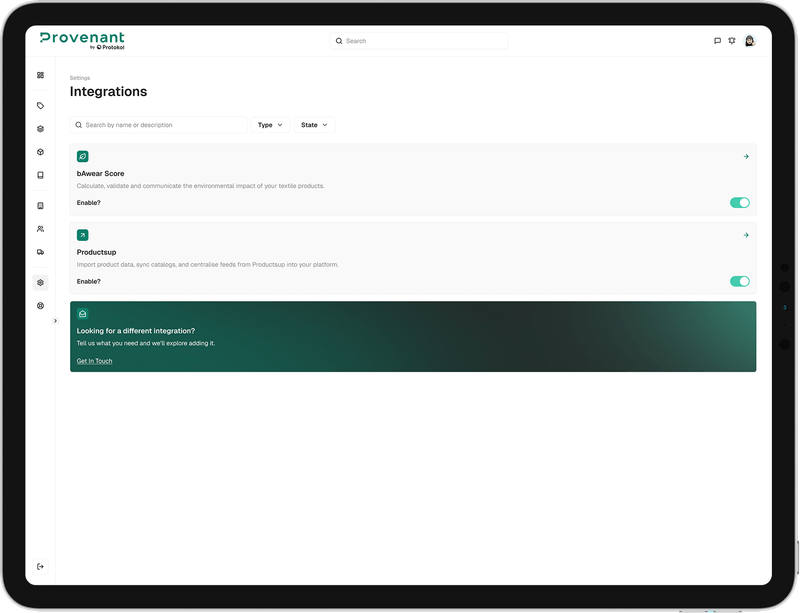
The Provenant DPP platform integrates seamlessly with ERP and Product Management Systems (PIMs) to help accelerate your product data management without replacing your existing infrastructure.
Moving Forward
Digital Product Passports represent more than compliance requirements. They offer strategic opportunities to enhance supply chain visibility, improve sustainability and strengthen operational efficiency. As regulatory frameworks evolve, organisations implementing comprehensive passport solutions position themselves for competitive advantage.
The transition requires investment in technology, processes and partnerships. However, returns extend beyond compliance. Enhanced transparency builds customer trust, improved data enables better decisions and demonstrated sustainability supports brand reputation.
Whether managing a straightforward supply chain or navigating complex global networks, Digital Product Passports provide the data infrastructure necessary for modern, responsible business operations. The journey toward full implementation begins with understanding current capabilities, identifying opportunities and committing to transparent, sustainable practices throughout the value chain.
The Provenant Digital Product Passport platform is designed to help organisations on their journey towards EU DPP readiness, enabling compliance with the ESPR and other evolving sustainability regulations, and strengthening their product data management infrastructure.
Leverage Provenant’s powerful DPP SaaS platform as a tool to help your organisation build a secure, transparent, sustainable supply chain, or get in touch with the Provenant experts here: contact us.