.svg)
.svg)
How Digital Product Passports Support PPWR Compliance and Sustainable Packaging

.jpg)

The EU’s Packaging and Packaging Waste Regulation (PPWR), which came into force in February 2025, sets new binding rules around sustainable packaging across the region.
These rules include increasing recyclability rates, integrating packaging reuse, and specifying ecodesign requirements for packaging which intend to tackle the sheer amount of waste that unsustainable product packaging is responsible for.
Digital Product Passports, a core pillar of the EU’s Ecodesign for Sustainable Products Regulation (ESPR), have the capability to help make information on packaging sustainability more accessible, and allow organisations to prove to regulators that they’re following the PPWR’s new rules.
What is the Packaging and Packaging Waste Regulation (PPWR)?
The new PPWR replaces the Packaging and Packaging Waste Directive (PPWD), which has been in place since 1994, with a new, more stringent directive that governments across the EU have to transpose into their own legal frameworks.
This removes any ambiguity around packaging sustainability rules, applying one standard in a uniform way across the bloc, creating a packaging sustainability baseline for any business that manufactures or sells packaged goods on the European market.
The PPWR is part of the EU Green Deal and Circular Economy Action Plan (CEAP), the core group of regulations that are driving the push towards net-zero and green targets in Europe.
What does the PPWR require of organisations? And which organisations are affected?
As well as requiring EU governments to make the PPWR’s requirements standardised across the region, companies must ensure:
- At least 65% of plastic packaging must be recycled by 2030
- Packaging is designed to minimise the environmental impact at the point of manufacture
- Reusable packaging targets are met, particularly focusing on high-waste sectors like hospitality and food
These rules refer to any business placing packaged goods on the European market, covering all packaging types (e.g primary, secondary, or tertiary packaging), including companies not registered within the EU that wish to place goods on the market.
Extended Producer Responsibility (EPR) rules mean that whether you’re a manufacturer, importer, retailer, or packaging supplier, you’ll need to be aware of obligations under the PPWR.
What is the timeline for the PPWR?
Having come into force in February 2025, the actual compliance obligations are set to take effect in August 2026 – meaning that for affected organisations, deadlines are drawing very close.
The PPWR exists in conjunction with the ESPR and has significant crossover and complementary effect with the ESPR’s product ecodesign requirements.
The ESPR came into effect on 18th July 2024 and directly mandates Digital Product Passports in order to comply with the regulation. Considering the crossover between the PPWR and ESPR, companies should consider how DPPs can aid compliance with both directives.
What are Digital Product Passports?
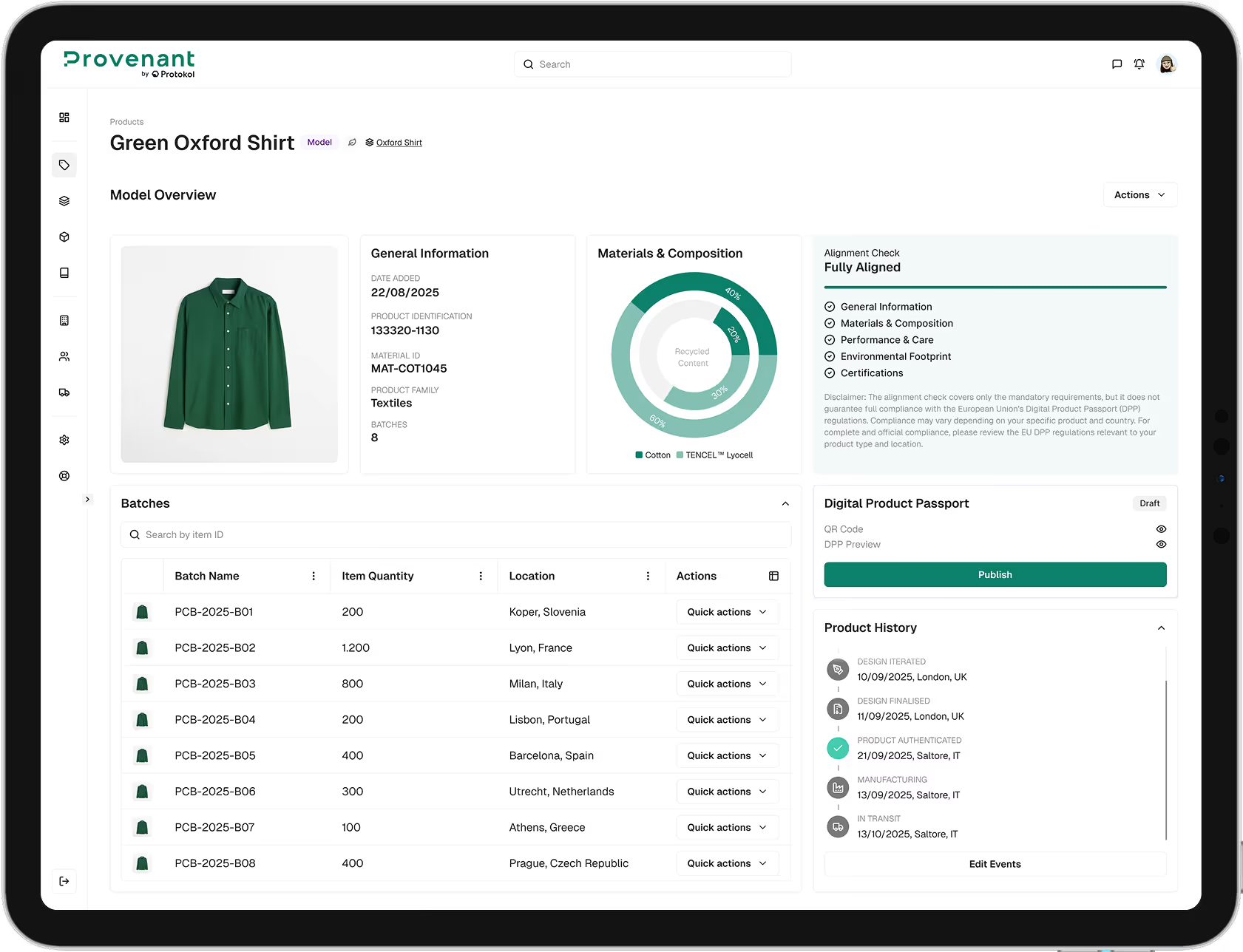
A Digital Product Passport (DPP) is a structured digital record attached to a physical product. It stores and communicates verifiable data about that product across its entire lifecycle, from raw material sourcing through to end-of-life disposal and recycling.
A core requirement of DPPs under the ESPR is that all data must be verifiable and transparent, helping make DPPs a robust compliance tool. For packaging specifically, a DPP can document:
- Material type and composition
- Weight and volume
- Percentage of recycled content
- Recyclability rating
- Reuse and disposal instructions
How Do Digital Product Passports Support PPWR Compliance?
The PPWR and the ESPR are both designed to work in tandem with each other, with the ESPR specifying packaging as a core area of concern. The significant crossover between the two pieces of legislation means that Digital Product Passports (strictly mandated by the ESPR) will assist organisations that also have to comply with the PPWR.
1. Delivering Traceable Recycling Information
The PPWR directly bolsters the rules around Extended Producer Responsibility (EPR), giving businesses heightened responsibility for end-of-life product management, especially with regards to packaging. DPPs enable organisations to comply with these requirements by embedding recycling and disposal instructions within the product’s digital record.
For complex packaging, DPPs can help provide a complete material breakdown of the packaging (think a plastic sleeve, adhesive label, and a cardboard tray within one product’s packaging) that can be supplied to specialist recycling companies to aid in their role.
Beyond aiding the organisation itself, this can help the wider sustainable packaging ecosystem, improving rates of material recovery and enabling more efficient processing of packaging waste.
2. Proving Green Claims with Verified Data
Digital Product Passports give organisations the ability to document packaging material choices, and display those effectively to customers and regulators – a key provision set out within the PPWR.
For example, if a business switches from using conventional plastic to HDPE recyclable and biodegradable materials, DPPs can be used to provide verifiable data as evidence to substantiate any marketing claims made around their packaging becoming more sustainable.
3. Enabling Reuse and Refill Systems
The PPWR sets specific targets for reusable packaging and refill schemes to help improve overall packaging sustainability. Digital Product Passports can help support businesses engaging in these activities.
For example, DPPs can record how many times a piece of packaging has been used and can confirm its suitability and safety for continued use. This can also act as guidance for retailers on conditions for packaging reuse, and when to remove it from service.
DPPs could even be used to give incentives to customers to reuse or recycle their packaging properly or bring their own containers, providing organisations with a practical, measurable way of delivering on PPWR rules.

Conclusion
The PPWR represents a dramatic shift in the way that packaging is managed across the EU. It moves from advice to mandatory requirements that will affect the way that production businesses reduce packaging waste.
As the ESPR specifically deals with product sustainability, it naturally has packaging built into its regulatory framework, resulting in significant crossover with the PPWR. The ESPR is also the driving force behind the adoption of Digital Product Passports.
DPPs support PPWR compliance by providing verifiable recycling and materials data, substantiating green claims through auditable records, and enabling the reuse and refill systems the regulation requires.
Organisations investing in DPP capabilities will drastically improve their ability to comply with the PPWR (alongside ESPR compliance), whilst helping to build an enduring, data-driven foundation for sustainable packaging practices.
Ready to optimise your packaging?
Discover how Digital Product Passports can simplify packaging regulations, streamline reporting, and keep your business ahead of every new requirement.

-DPPs-in-Supply-Chain.jpg)
-CBAM-2.jpg)

